
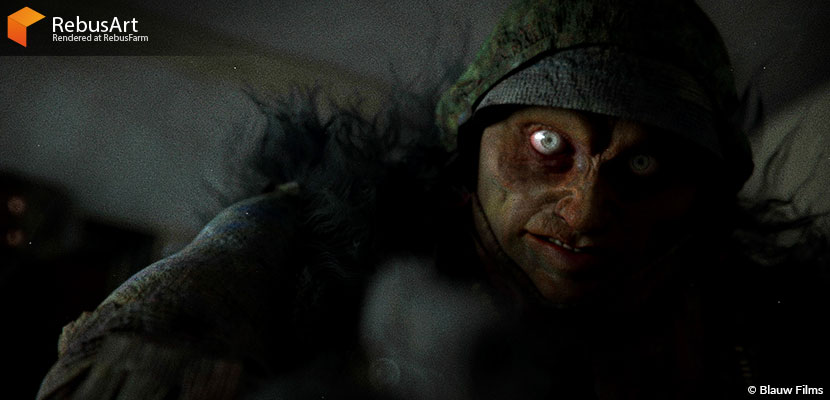
Welcome to our latest RebusArt Feature, spotlighting Blauw Films, an independent film and animation studio pushing the boundaries of storytelling through striking 3D worlds and emotionally rich characters. The studio blends artistic vision with technical mastery to craft original IPs that resonate far beyond the screen. In this interview, we dive into their creative process, the evolution of their haunting and visually captivating short film "Apple Rot", and the imaginative vision that drives their unique approach to independent filmmaking.
Since this feature dives into the making of a short film, we recommend watching Apple Rot first, if you haven't seen it already.
Introduction.
Please share a bit about yourself and your studio.
Leo: Thank you for having us RebusFarm! My name is Leonardo Verkoelen, I'm the founder of Blauw Films and the director of Apple Rot.
Charlotte: I am Charlotte Simons, the creative co-founder of Blauw Films. For Apple Rot, I was responsible for the character and costume design.
Leo: As a bit of background on Blauw Films, we are an independent film- and animation studio developing original IPs. We mostly make films in 3D animation and we distribute everything directly from our website: blauwfilms.com
It was always the dream to make our own films, at the level we aimed for, independently. That was easier said than done. So we started diving deep into the business of cinema.
About 7-8 years ago we realised that by creating our short films and sharing all developments and resources online, we could both help other creators with their projects and achieve a much higher output in our own projects.
In the past few years we've personally felt the power of having your own distribution pipeline when it comes to getting your own ideas off the ground.
The Studio Behind the Scenes.
Could you describe your typical creative process when starting a new project, from ideation to completion?
Leo: Ideas come from everywhere. But then the trick is to know what you'd like to spend months to years working on.
Most often the ideas come from a combination of many experiences accumulated over the years.
For our shorts it usually starts with something that sticks naturally. Something that doesn't need to be written down immediately and will still be remembered as something to pursue.
In the case of Apple Rot it came from a sleep-paralysis experience. A really uncomfortable one of being robbed while lying in bed. Upon waking up I quickly discussed this concept with Charlotte. And over the next few months it slowly started taking shape.
Usually, we start with simple story layouts, exploring the key scenes and emotions. From ther,e we start developing world-building. Who are the characters? How is the setting influenced by or influencing the story? Thanks to our co-founder Harry Rhys Williams (who is a story-wizard), this process is one of the most fun and explorative ones.
Parallel to that, the screenplay is written. Followed by a script-breakdown which marks up every technical requirement of the production.
This early framework acts as a filter for the ideas that follow. In a way, there are not that many paths to take once you know what the end result should be :)
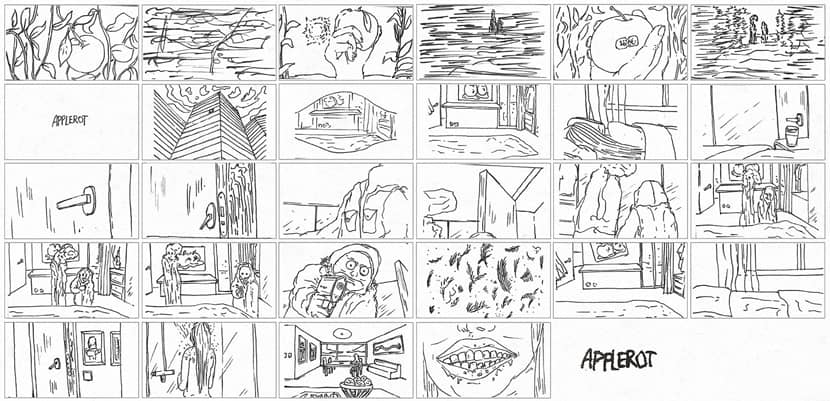
I start by translating the screenplay into a storyboard. Which then gets handed over to Charlotte for character design.
Charlotte: For me, character development starts as soon as Leo shares a concept with me. It is in this initial stage that the emotional intent of the story is the strongest. I always try to hold on to this feeling, no matter what.
The script is the blueprint for the short film, but an IP is inevitably a bit more expansive than that. Together with Leo, we develop Apple Rot as a brand, complete with world-building and style guides, which then inform design decisions across the board and ensure brand cohesion.
My role as creative director and character/costume designer always goes hand in hand. Characters are often the face of an IP, and therefore have to embody the story we want to tell.
Personally, I need physical materials to inspire digital work. I draw and paint characters to find their colours and shapes, and gather or create materials to use as texture references. Apple Rot immediately took me to rotten, moldy and disintegrating materials. I ended up reading a lot about archeological excavation of textile fibers and looking at images of moldy leather. We rotted apples and leaves and photographed the results. I painted and distressed natural fiber textiles, which were digitalised. Slowly but surely, the characters materialize as I'm designing them.
What's the one tool or technique you couldn't live without?
Leo: Today I'd say there are two. A blank page notebook for all my thoughts and ideas. And Chaos Corona to render the work with the look and feel we're looking for.
Everything else is quite flexible for the project we're working on.
How do you stay creatively inspired when working on long or challenging projects? Are there specific rituals or habits you follow to get into a creative mindset?
Leo: It's directly driven by the initial idea. At Blauw Films we're very selective about which projects we start pre-production on.
Especially as we develop everything as an IP, including short stories, products and additional media, the time we'll be spending with the world is a matter of years.
However, if it passes that initial test, you can be certain that it's a project that will fuel us through to the end.
What helps us stay inspired and quickly get into flow is the passion we have for the project.
Challenges will come no matter what. And if you're aiming to achieve something beyond your current capabilities, these challenges can be extremely frustrating.
So it's good to be able to daydream about the end result being totally worth it.
Charlotte: Good characters will always be infinitely inspirational to me. If I have to, I will simply pull up my moodboards and brand guides again and it will immediately transport me into the right mindset.
Although we have been developing Apple Rot for a good amount of time now, there is always more to explore. For example, Harry is writing a short story about the origins of "Sad Tall". For that project, we pulled out the world-building document again and started discussing the things we didn’t know yet. When a world keeps inspiring, time spent in it flies by.
Project Spotlight.
Let's delve into your project "Apple Rot". What was the inspiration behind it, and what were the main challenges you encountered during its development?
Leo: It honestly was a really fun project from start to finish.
As I briefly mentioned, the idea came from a sleep-paralysis experience a few years ago. Apple Rot then went through a slow and organic ideation process. We were busy with setting up the Blauw Films website and building the foundation for our other IPs.
Step by step, we started getting concept art finished, character designs finished, an original score and suddenly Apple Rot was much closer to production-ready than we thought!
Charlotte: Character animation was a huge unknown for us. It was a steep learning curve, as I had very little experience animating characters haha… This is really where the storyboard was holy. We only made and animated what was absolutely necessary. This way, we were able to focus on what was important, without getting lost in perfecting every detail. We had given ourselves a very tight deadline, after all.
Leo: Yeah, it was a bit of a sprint. Luckily, the team knew what to do, so we could lock in for 2-3 months and get the film over the finish line.
There were quite a few challenges, though. Our computers were a big bottleneck and were struggling with handling the heavy Alembic files with animation. So quite a bit of time was spent optimizing the scenes to ensure they were workable on our end.
What software, renderer, and plugins did you use for this particular project?
Leo: I built the environments and camera animations in Cinema 4D. Each asset was then taken into Substance 3D Painter for texturing. Charlotte did all the characters, clothing and animation.
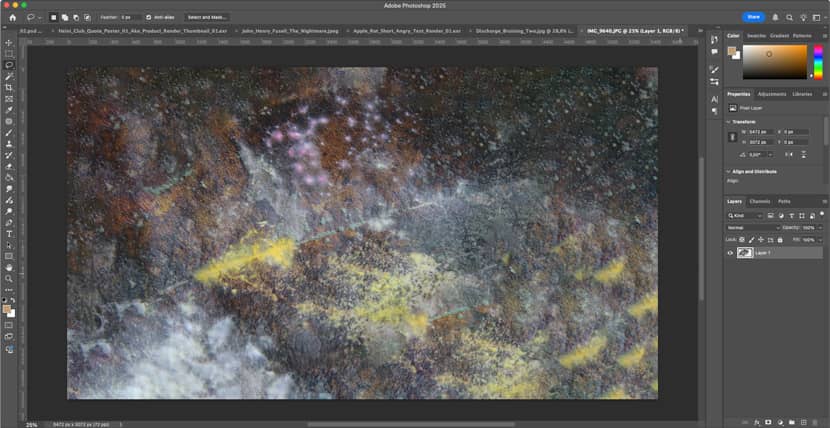
Charlotte: The characters were created with Zbrush for sculpting and Blender for hair, rigging and animation. The costumes were created and sometimes simulated with Style3D. Photoshop was used to process textures and other photobash assets.
Leo: Finally, everything came together inside of Cinema 4D and was lit and rendered in Chaos Corona with the help of RebusFarm.
How did rendering this project at the RebusFarm Render Service impact your workflow, and were there any specific features or aspects of the service that stood out to you?
Leo: It was an absolute life-saver! We love the look of Chaos Corona for our animated films. There is a certain magic-touch that comes with Corona’s BRDF that gives everything a very unique look. However, the downside is that it’s quite intense on the CPU.
If we were to render the film on our own computers, it would take ages.
Not only would it be impossible to finish the film within our expected timeframe. It would also completely bottleneck the flow or creation.
We've been using RebusFarm for a very long time now, so it was the obvious choice. But particularly what I love about your service is the customer-support.
Your team was always incredibly helpful and ready to solve any of the issues we had during rendering. It was all an incredibly smooth experience.
Can you provide some step-by-step breakdowns of the project? Anything you find interesting to go into more detail about.
Leo: Absolutely! I'll start from the annotated screenplay, as that's the blueprint for everything that comes after. Everything we have to think of is marked up in a color. This becomes both a checklist for production as well as a scope overview.

At this stage, it's important for each of us to start figuring out our own pipeline and requirements. What can we do ourselves? Where do we need additional resources or talent?
As the director of the film, I find it important to make the storyboard. By doing this right after the screenplay is locked, you get a much better sense of what will be important to focus on. As well as giving a clear direction to every other department.
Charlotte: Drawing and painting are the quickest and most intuitive tools I have to start creating characters. It is an organic process, which I won't quit until the character 'feels' right. I will design characters and costumes in one breath, and will work with paints to ignore worrying about technical execution. I imagine intuitively first, and will refine for technical execution later. Before I start designing in Style3D, I usually make a diagram-like, flat drawing of the costume. These are informational, not inspirational, and make sure I know what I'll be making. After this, I still keep my options open inside the 3D software and go with the flow. The tool will always help to inspire the design.
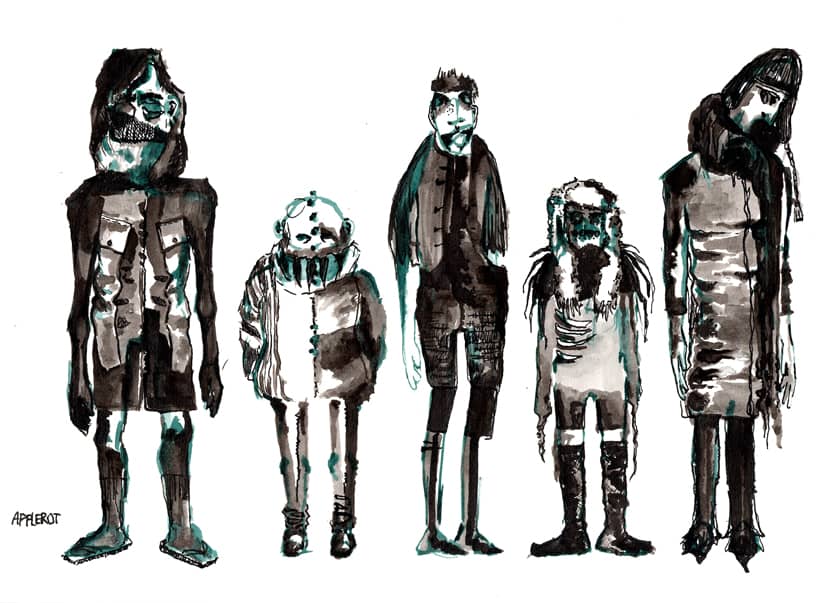
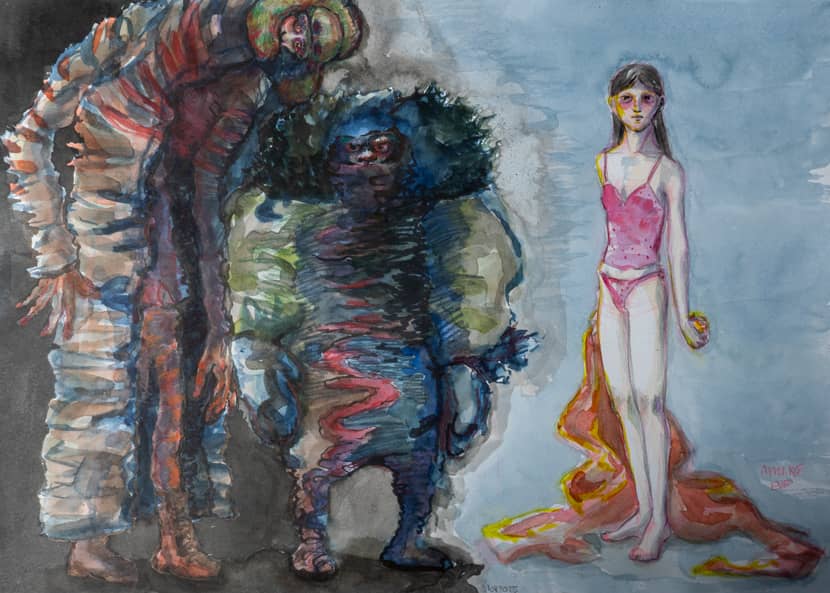
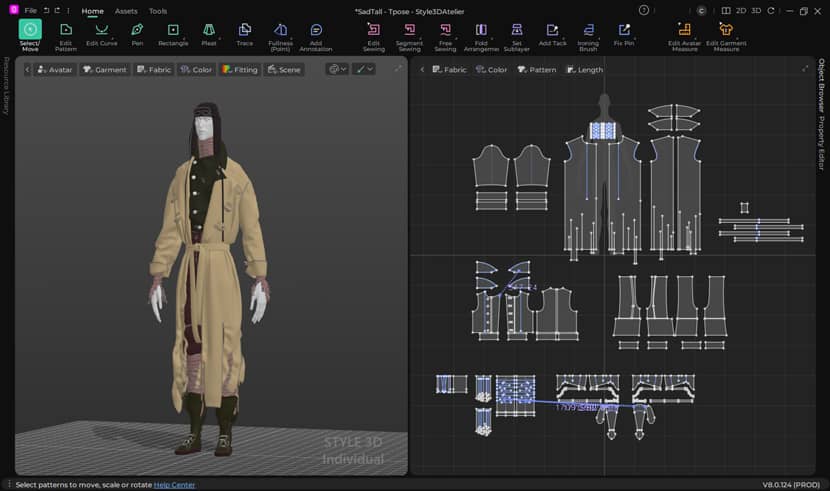
I think the two Apple Rot demons, "Short Angry" and "Sad Tall" are interesting examples of how to translate abstract costume design into 3D garments. During the design process, the characters constantly moved up and down the scale of fantastical to wearable, and it was a fun challenge to give them a creepy feeling, without them losing their humanity.
In the end, I referenced a lot of archeological excavations of textiles and clothes. I was not only inspired by the materiality of the disintegrated materials, but also the interesting construction of historical garments. The clothes "Short Angry" and "Sad Tall" wear might tell a story about a life they once lived… Although I think it might be a very weird story, judging from the odd things they wear haha.
In their shape language, they're a classic duo. One short and one tall. The short one is bulky and intimidating, the tall one is lanky and creepy. I love to play with the expected and the unexpected in my designs. There should always be something your brain can tether to.
Their faces are very human, too. This was very important to us. Although they’re creepy demons, we thought they should definitely remain as humanoid as possible.

Leo: With every character being completed, it was time for texturing. The process mainly consisted of patience. Layer by layer, the organic look of the characters was built up. Skin imperfections, lots of color variation and extensively making use of the Normal and Cavity maps from ZBrush to get as much detail as possible in the textures.
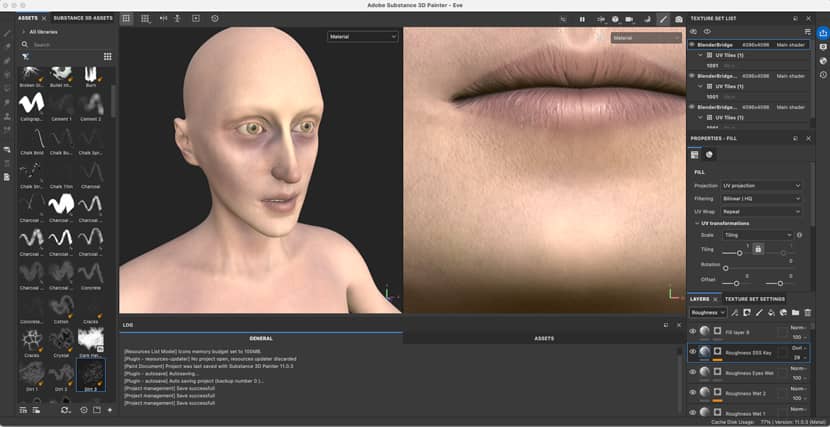
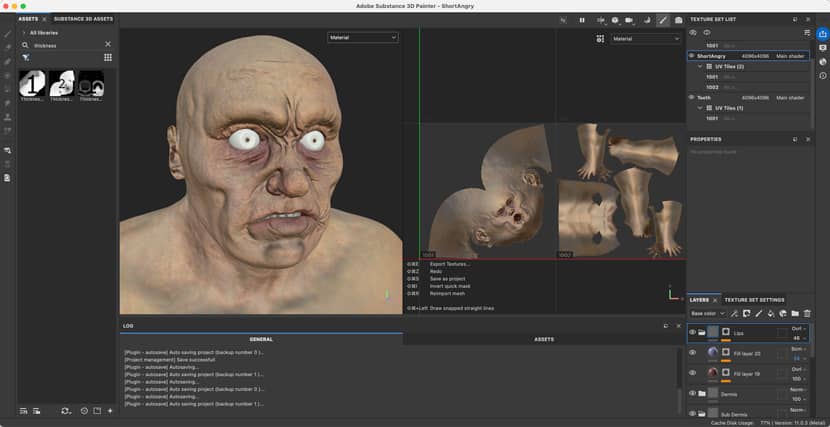
After the characters were textured, it was time to texture the costumes. We were looking for a rough and mouldy look. Luckily, we anticipated this during pre-production, and started rotting leaves and apples to photograph later. These types of details are difficult to replicate from a purely digital workflow.
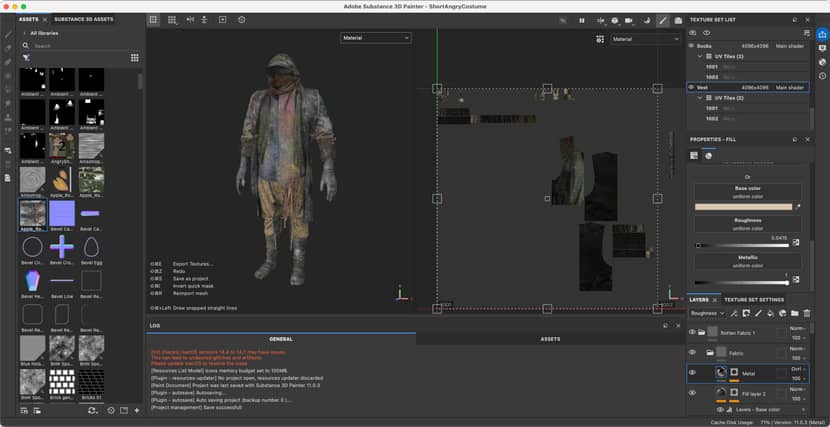
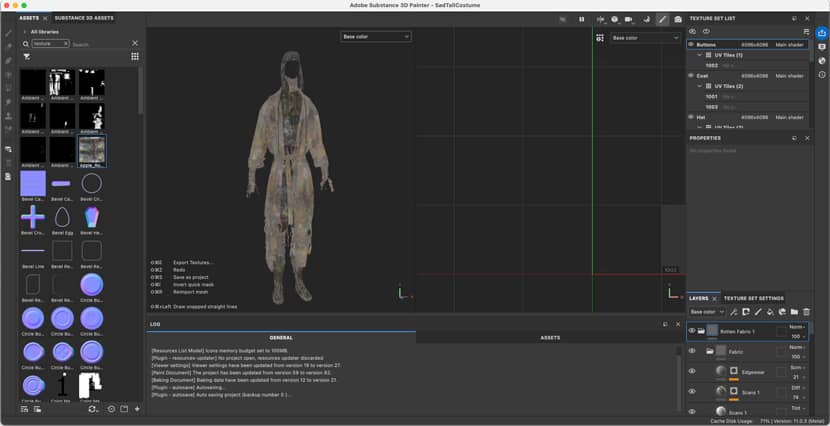
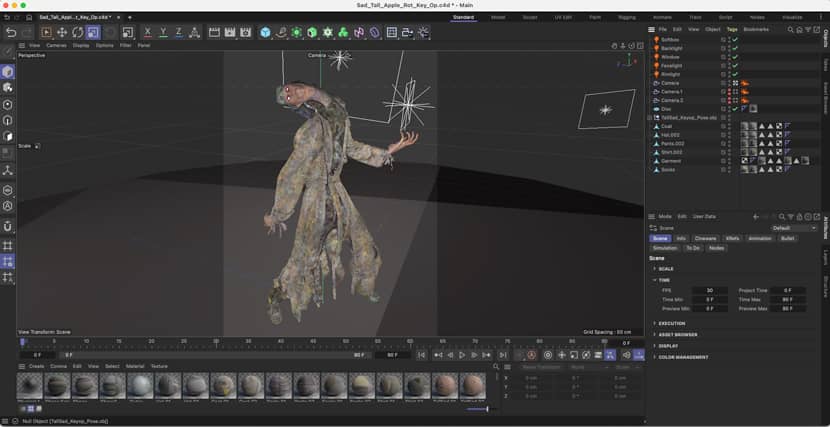
Leo: And then it's time to get everything together inside of Cinema 4D, build all the shaders and start the lighting and camera design process.
I personally have this thing that I only use the 50mm lens for the entire film. It's a personal stylistic preference in which I prefer images that look undistorted.
For the lighting, it was mainly a back and forth between the team, with many screenshots being taken in the meantime. An iterative process, I'd say.
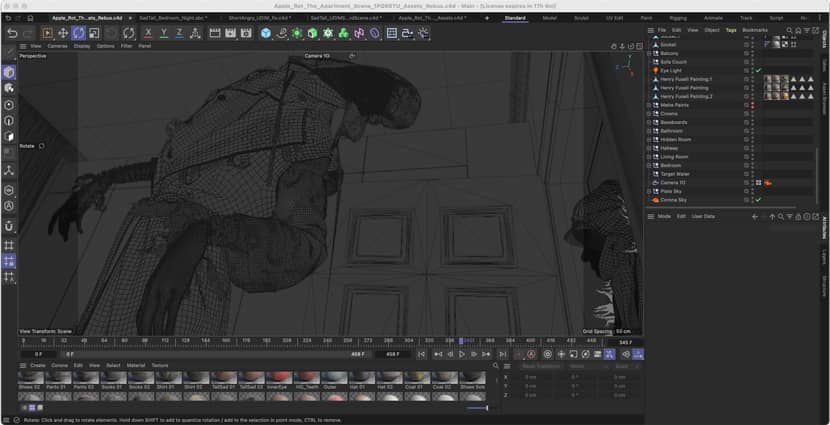
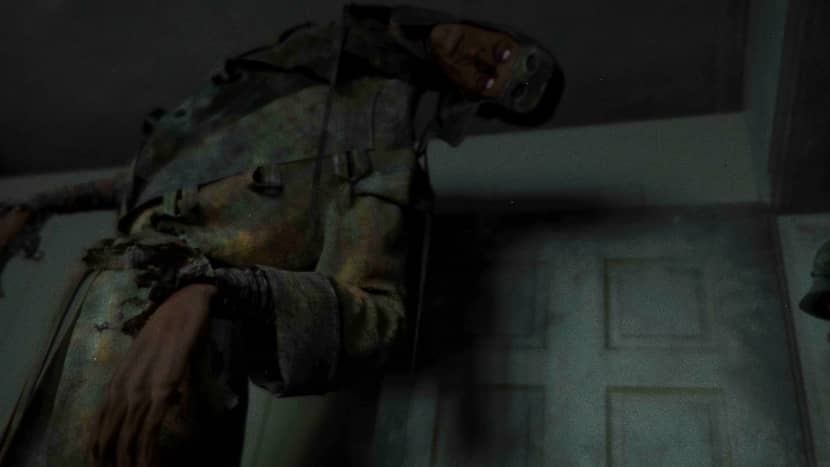
Charlotte: Animation was mostly done by copying reference shots of ourselves acting out the scenes. Leo and I worked together to block out character and camera movement, after which I did the animation for the demons and Eve, while Leo did the animation for You.
Most of the clothes were simulated inside Style3D. This is usually a process that takes a couple of runs before glitches are minimal. Even then, I am excited to start looking into Houdini workflows for our next project.

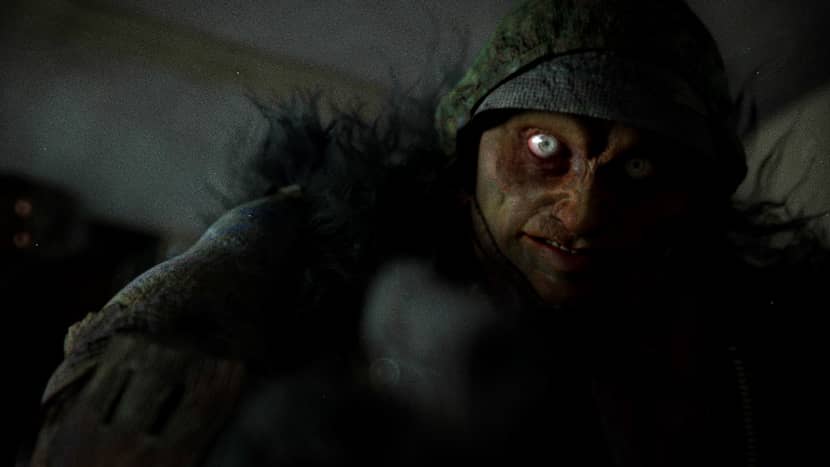
Leo: Then we're already almost done with the film. Every time a shot would be approved by everyone in the team, the shot was sent to RebusFarm.
There was a minimal amount of compositing required as we aimed to create as much as possible in-render.
So, after minor color correction and post-processing the clips went straight into Adobe Premiere for editing. As we had already been exporting viewport renders, the editing process was mainly about replacing clips and perfecting the timing.
For sound design, it was a combination of audio we recorded ourselves, audio we received from the voice actors and a variety of clips from sound-effects libraries.
And that was it! That's how Apple Rot came to life :)
Closing.
Looking back at your journey as 3D artists, what do you consider to be your most significant milestone or achievement thus far, and why?
Leo: Hmm… For me, that must've been the day we decided to quit freelancing and go all-in with developing our own films. It was maybe the most difficult time for Blauw Films financially, but we had to dive into the abyss to truly start chasing what we're after.
When it comes to achievements, only time will tell. There is still so much to do! It's insane how much there is to do. But the best things are most definitely yet to come. How about you, Charlotte?
Charlotte: I agree haha! Leo and I are ambitious, always looking at the future. But whenever I want to feel proud of my current achievements, I will remember that child-me would be so excited to hear we are telling our own stories and bringing our own characters to life! With every character we finish in 3D, we can see how we have improved. It's exciting to see your vision materialize.
I would like to say, however, that finishing Apple Rot is a huge accomplishment for Blauw Films. We did it in a crazy turnaround, and we've got the entire team to thank for that.
Are there any new art movements, developments, or industries (e.g.,a.i., gaming, film, virtual reality) that you're excited to explore further?
Leo: 100%. I'm quite selective about technological developments. However, implementing AI-search on our website would highly improve the user-experience. It would be great to have those who recently watched Apple Rot be recommended the character-wikis or certain behind-the-scenes pages dynamically.
On the arts side of things, I'm mainly looking at motion-capture workflows for our next project. And I'm very excited to start dipping our toes into video-game partnerships for the different IPs.
Charlotte: I have always been obsessed with transmedia IP. To me, the diversity of technology represents the variety of ways a story is able to expand. People all over the world are now able to teach themselves whatever they want, and many of them are extremely passionate about storytelling. Creatives will always find exciting places to take any tool, and so if anything, I am just excited about the possibilities of how we can interact with our favorite stories.
Finally, what's next on your artistic horizon? Are there any exciting projects or goals you're eager to pursue soon?
Leo: Oh yes!
Charlotte: So many! Check our "Worlds" on blauwfilms.com, and I could literally speak for hours about every single one of them.
Leo: The next IP on our slate that will get a short film is Syntactic Labyrinths. It's a transcendental sci-fi film that explores the preservation of collective knowledge inside of an unmanned spaceship.
It's going to be quite a different experience from Apple Rot. That's for sure!
Thank you for sharing your insights and expertise with us! We look forward to your upcoming projects and are ready to support you with our render power!
About the Studio
Blauw Films is an independent film and animation studio dedicated to developing original story-driven IPs through cinematic 3D animation. Founded by director Leonardo Verkoelen and creative co-founder Charlotte Simons, the team combines world-building, design, and storytelling to create immersive narratives with strong artistic identity. Their work spans character design, visual development, and high-end animated shorts, crafted with a deeply personal approach and distributed directly through their own platform. With each new project, Blauw Films continues to refine its distinctive voice while inspiring creators through its open sharing of process and resources.